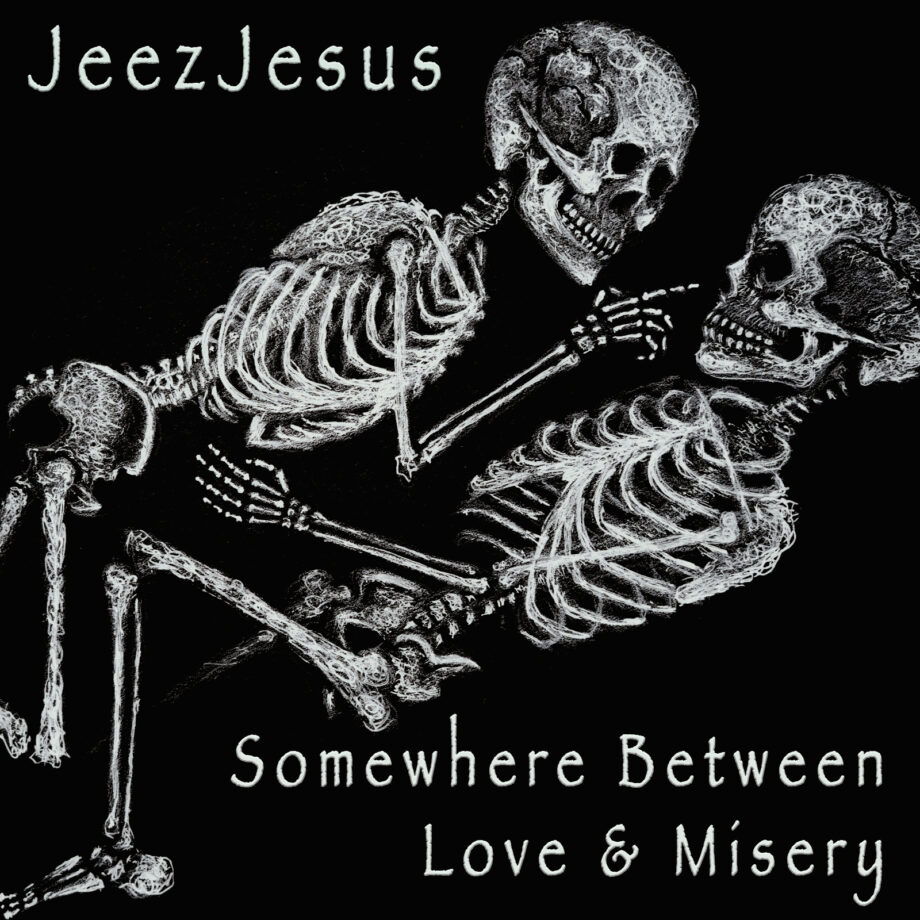
Somewhere Between Love & Misery feels like a purge. Not just of ideas or unused demos, but of emotions that have clearly been sitting around for a long time. This album closes a chapter for JeezJesus, and you can hear that sense of finality in how uncompromising, messy, and sincere it is. It’s dark electronic music that doesn’t just flirt with discomfort — it lives in it. The album opens with Abandon Everything (Intro), a bleak, distorted soundscape that sets the tone immediately. It feels hostile and uneasy, like walking into a place you’re not sure you’re meant to be. As an intro, it works less as a song and more as a warning: this album isn’t here to be polite. I See You hits hard straight after and stands out as one of the strongest tracks on the record. It’s a politically charged electro-punk anthem that feels urgent without being vague. The repetition of the title line becomes a kind of rallying cry, aimed at people who feel ignored or crushed by the current state of the world. There’s anger here, but also solidarity — it’s confrontational while still feeling human.
With Like to Like You, the focus shifts inward. This dark synthpop track takes aim at social media culture and the quiet damage it does to self-esteem. The lyrics feel painfully relatable, especially in how they describe comparison, algorithmic control, and the sense of being unseen. It’s catchy in a cold, unsettling way, which suits the subject perfectly. Control dives deeper into personal struggle. Heavily influenced by early Nine Inch Nails, it feels claustrophobic and intense, mirroring the battle between depression, anger, and the desire to regain control. The repetition and harshness make the song feel like a confrontation with the self rather than a performance for the listener. The album takes a heavier turn with Cost of the Lost, which leans into metal textures and sharper guitars. Lyrically, it’s one of the most overtly political tracks, addressing war, media-driven hatred, and global violence. It’s bleak, but deliberately so — the song doesn’t offer solutions, just an uncomfortable reflection of reality. Don’t Wanna Be Here slows things slightly but keeps the darkness intact. Rooted firmly in darkwave, it captures feelings of alienation and social exhaustion. While it may not be the album’s most dynamic moment, it reinforces the theme of disconnect that runs through the first half of the record. Pressures of Life (Killing Me) is abrasive by design. Grinding, repetitive, and exhausting, it sounds like the musical equivalent of modern working life. The industrial EBM influence is clear, and the track’s refusal to be “enjoyable” feels intentional. It’s confrontational, and that’s the point.
The album noticeably shifts with We Could Be Friends, which marks the start of a lighter, more melodic second half. Drawing from 80s synthpop, it’s warm and emotionally vulnerable, exploring the fear of confessing romantic feelings to a close friend. After so much anger and tension, this track feels like a breath of air. Burnt Out keeps the momentum going with a short, chaotic new-wave energy. It’s punchy and slightly frantic, capturing the exhaustion that comes from chasing dreams too hard for too long. Its simplicity works in its favour. It’s Doing My Head In continues the synthpop thread, revisiting themes of repressed love and emotional overwhelm. Minimal but sincere, it’s one of the album’s most tender moments, letting vulnerability take centre stage without irony. With Work to Die, JeezJesus returns to socio-economic critique, but this time with more bite and sarcasm. It’s an electro-punk anthem that sums up many of the album’s frustrations about capitalism, inequality, and burnout. It’s blunt, catchy, and easy to imagine shouted along to live. I’m So Stressed is chaotic in the best way. Post-punk with unexpected rock-a-billy edges, it sounds like it’s on the verge of falling apart — which perfectly suits its theme. The repetition feels manic, capturing stress not as a concept but as a physical state. The album closes with I Want a Pony, an intentionally strange and provocative track. Raw, chaotic, and uncomfortable, it leans into fetishistic imagery and domination themes with no attempt to soften the edges. As an ending, it feels deliberate — a reminder that this project exists for outsiders, not approval. Taken as a whole, Somewhere Between Love & Misery is messy, eclectic, and emotionally heavy — but that’s exactly what makes it compelling. It doesn’t try to smooth out its contradictions. Instead, it embraces them, offering a raw snapshot of anger, anxiety, love, and exhaustion in the digital age. This isn’t an easy album, but it’s an honest one — and that honesty is its greatest strength.
