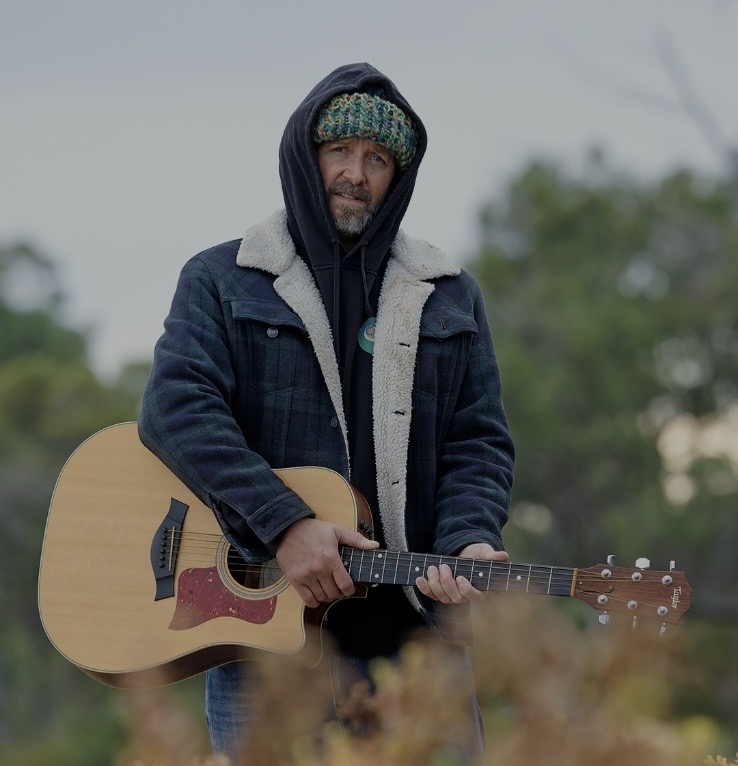
Some songs tell stories, while others preserve moments in time. Mark Moule’s “Eyes of Izzy” manages to accomplish both, presenting a thoughtful narrative inspired by the life of Western Australian photography pioneer Izzy Orlof while quietly reflecting the songwriter’s own emotional journey. Although conceived more than a decade ago as part of a university collaboration with Paul Curtis, the single arrives today with a sense of maturity and purpose that makes its delayed release feel surprisingly fitting.
The track is driven by authenticity rather than embellishment. Moule steps outside his usual autobiographical approach to write about another individual, yet his personal experiences of loneliness, uncertainty, and longing naturally seep into the composition. Those emotional undercurrents give the song an added dimension, transforming what could have been a straightforward historical tribute into something layered and introspective. The decision to preserve the spirit of the original recording, captured in Curtis’s Fremantle home studio, with the first take ultimately becoming the keeper—only enhances its sincerity.

For an artist making a rare departure from his usual subject matter, Mark Moule delivers a compelling and memorable piece of work. “Eyes of Izzy” stands as both a celebration of an overlooked historical figure and a subtle portrait of the songwriter’s own resilience during a difficult chapter of life. It is an understated yet impactful release that demonstrates the enduring power of honest songwriting and proves that sometimes the right music simply waits for the right moment to be heard.
The production remains understated, allowing Moule’s songwriting to occupy centre stage. His lyrical style reflects the influence of classic narrative-driven artists, favouring emotional honesty over commercial polish. Rather than chasing grand arrangements, “Eyes of Izzy” relies on its storytelling, measured delivery, and reflective atmosphere to engage listeners. The result is a song that unfolds gradually, rewarding close attention with imagery and sentiment that linger beyond the final note.

 English