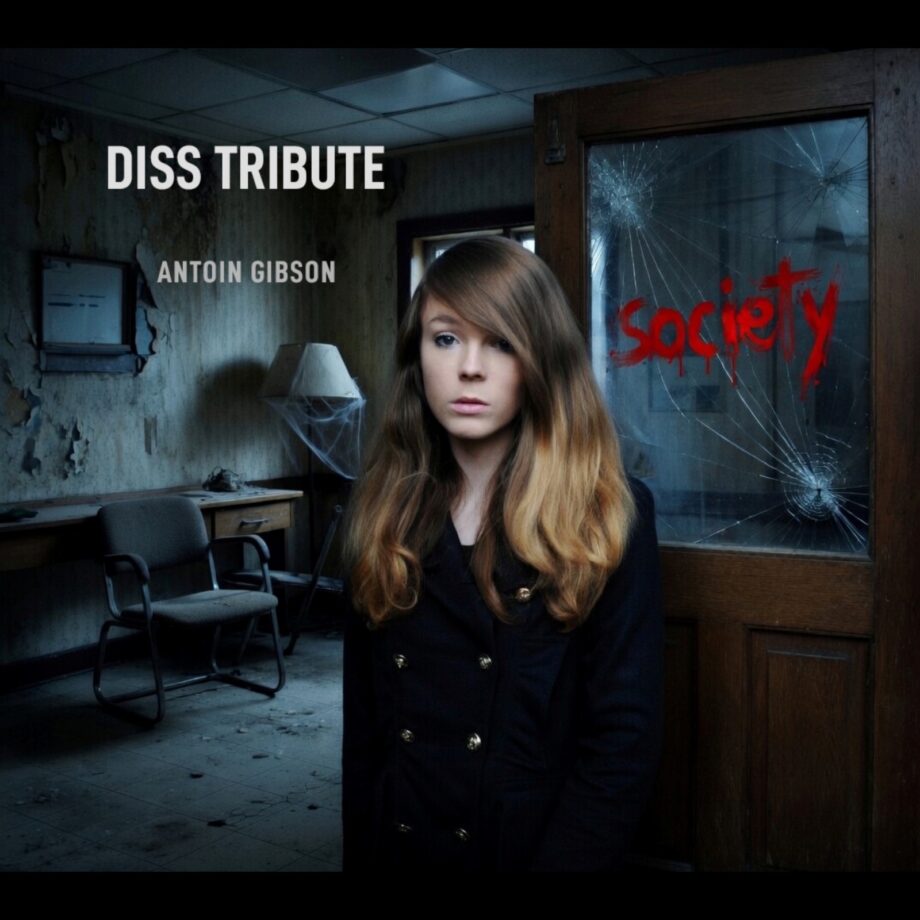
There’s nothing accidental about Diss Tribute, the latest original single from Antoin Gibson. Released as a one-year marker since her breakout moment, the track feels less like a celebration and more like a calculated escalation. Where many artists might lean into nostalgia, Gibson pivots sharply, using this anniversary to challenge the very system that helped amplify her. It’s a bold move, and one that immediately sets the tone for a release rooted in intention rather than validation.
What makes Diss Tribute particularly compelling is its unconventional entry point. A standout lyrical moment lands with striking clarity: “What happened to freedom of speech? We’re supposedly a ‘Democracy.’ Sure, say what you want, being heard has become a bureaucracy. It’s written clearly in the US Constitution.” It’s a line that encapsulates the core tension of Diss Tribute, distilling Gibson’s critique into a sharp, memorable reflection on how expression today feels less restricted by voice and more by access. Instead of chasing streams or viral traction, Gibson flips the script—leading with sync placements across major networks like PBS, MTV’s The Challenge, Discovery, and NASCAR Productions. This strategy reframes success, suggesting that visibility doesn’t always have to follow the algorithmic path. It’s a quiet disruption, but a meaningful one, positioning Gibson as someone who understands not just music, but the architecture behind its distribution.
The track is stripped back yet forceful. There’s no excess here, just a confrontational delivery that demands attention. Gibson’s lyrical focus cuts through the noise, dissecting an industry increasingly shaped by engineered visibility rather than organic reach. She doesn’t just critique the system; she exposes its mechanics. The result is a listening experience that feels less like passive entertainment and more like a direct challenge to the audience.

As part of her ongoing “C U Next Tuesday” rollout, Diss Tribute functions as both a timestamp and a strategy. It builds on the trajectory established by earlier releases like Dead End and Venom-Laced Tears, but shifts the tone from introspection to confrontation. In doing so, Gibson positions herself outside traditional release cycles, operating with a long-term vision that prioritizes control, authorship, and impact. This isn’t just a track; it’s a statement of intent.
